
The Secret Service Failed

The easiest lie to tell the American public after a security failure is that everyone involved is a hero.
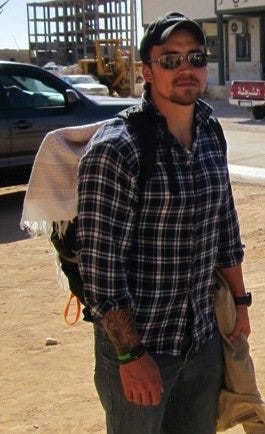
*Pictured in Libya protecting senior officials as a Sniper Team Lead for Special Operations Command-Africa.
That is the line people default to because it is emotionally safe. A man tries to assassinate a former president, shots are fired, agents move, a crowd panics, and the media immediately rushes to the most comfortable conclusion possible. “Law enforcement saved the day.” “Secret Service were heroes.” “The system worked.”
No. That is not what happened.
And if you have ever done protective security, ever worked PSD, ever run advance, ever handled dignitary protection in real environments where the stakes are life and death, you know the difference between a catastrophe prevented by competence and a catastrophe narrowly avoided in spite of glaring mistakes.
There is no question that any man or woman willing to stand in the line of fire for another human being is doing something honorable. There is no question that anyone who chooses a profession where the cost of failure can be measured in blood deserves respect. But respect for the profession cannot become an excuse to lie about performance. In this business, the standard is not whether you showed up. The standard is whether you did your job at the level the mission requires.
And in Washington, D.C., at the White House Correspondents’ Dinner, what I saw was not a clean win. What I saw was a series of preventable failures that could have ended in a historic national disaster.
The facts, as currently reported, are straightforward. A suspect identified as 31 year old Cole Tomas Allen allegedly breached security at the Washington Hilton during the White House Correspondents’ Dinner, where President Trump, Vice President J.D. Vance, cabinet officials, and hundreds of attendees were present. Federal authorities say he was armed with a shotgun, a handgun, and knives, and that he was stopped before reaching the ballroom. One federal officer was hit in a ballistic vest and survived. The suspect was later charged with attempted assassination of the president and other firearms offenses. Authorities have also confirmed that a manifesto was sent to family members shortly before the attack, and multiple outlets have reported that it contained bizarre ideological language and what were described as “rules of engagement.”
That is the official story. But the official story is not the same thing as a professional assessment.
I have done presidential level protective work in special operations. I have done protection for U.S. officials overseas through the CIA ecosystem. I understand how these layers are supposed to work, and I understand why they exist. Physical security is not theoretical. It is not vibes. It is not “we had a lot of tech.” It is not “the threat was eventually stopped.” It is geometry, timing, human behavior, fields of fire, standoff distance, choke points, and reaction time under stress. It is building an environment where the bad guy never gets the initiative.
And in this case, they gave him the initiative.
The first major failure was perimeter design.
If you are protecting the President of the United States, the Vice President, cabinet members, and a target rich environment inside a functioning hotel, your outer perimeter matters more than almost anything else. The whole point of that outer perimeter is to push threat detection and interdiction as far away from the protected principal as possible. You want time. You want distance. You want controlled access. You want multiple opportunities to identify, isolate, and neutralize before a threat gets anywhere near the breach point.
Instead, what appears to have happened is exactly what should never happen. A suspect was able to get close enough to breach a checkpoint near the event area, inside a hotel environment with layered but clearly insufficient physical control. Reuters reported that he bypassed a checkpoint on the floor above the event and opened fire, while another report described him as having breached two checkpoints before being stopped short of the ballroom.
That is not a comforting detail. That is an indictment.
People keep saying, “But they had technology. Facial recognition. Weapon detection. Integrated systems.” Fine. Technology is useful. It can help. But if you cannot establish basic physical security, technology becomes a false sense of confidence. Sensors do not replace discipline. Cameras do not replace standoff. Software does not replace intelligent checkpoint placement. If a man with a plan, weapons, and intent can physically penetrate the controlled space around a protectee package, your system has already failed at the level that matters most.
And let’s be clear about the most basic principle here. You do not want a threat actor crossing the front door threshold of a protected site and then discovering him deeper in the structure while he still has surprise on his side. Once he is inside, he is contained, yes, but he is also now inside your problem set. He knows where he is going. He can exploit chaos. He can mask in movement. He can use architecture against you. He can create a cascade effect in a crowd. If you have an internal checkpoint that is too close to the breach point, or if your outer perimeter is too soft, you are inviting the exact kind of compressed reaction window that gets people killed.
The second major failure was the reaction timeline.
On my own breakdown, what stood out was not just that the attack happened. It was how long key movements took once it happened. There was a meaningful gap between the evacuation of J.D. Vance and the evacuation of President Trump. There was also a visible lag before President Trump had immediate body coverage from agents after the shots were fired. We are not talking about a suspicious noise in a parking garage. We are talking about actual gunfire, one floor away, in a venue packed with a thousand people and stacked with national level targets.
That matters.
In protective operations, seconds are not abstract. Seconds are everything. If you are inside that close threat envelope and shots have already been fired, the protective detail should move with violent efficiency. Immediate shield. Immediate movement. Immediate extraction. Immediate collapse of uncertainty around the principal. There should be no hesitation in that moment. No ambiguity. No delay that creates a dead space where the principal is exposed to unknown variables.
The public hears “they evacuated him within minutes” and assumes that means success. But “within minutes” is not the standard in a close range attack. Minutes is an eternity. In that environment, ten seconds can be the difference between a headline and a funeral.
The third major failure was marksmanship and muzzle discipline under stress.
Multiple reports indicate that agents returned fire during the incident. Reuters reported that the suspect was apprehended without further gunfire after breaching the checkpoint, but there are now widespread references to return fire and an officer being struck in the vest. The officer’s survival appears to be directly attributable to his body armor.
That officer is lucky to be alive.
And let me say this as plainly as possible. In a crowded, compressed environment, with federal protectees nearby, press, staff, civilians, and overlapping law enforcement elements, missing a threat with a pistol multiple times is not a success story. It is a dangerous failure. If you proactively engage with a handgun to stop an active assassin and you miss repeatedly in a cluttered environment, every one of those rounds has a lawyer attached to it, a family attached to it, and a body count attached to it if the geometry is wrong.
The fact that the suspect allegedly did not make it into the ballroom is good. The fact that he appears to have been stopped before fully reaching the protected venue is good. But that does not erase what happened in the engagement itself. If the threat was only prevented from getting deeper because he lost momentum, tripped, or otherwise failed in his own movement, that is not evidence of elite response. That is evidence that the margin between disaster and survival was thinner than people want to admit.
And one of the most under-discussed risks in any protective incident is friendly fire.
When multiple armed personnel converge in a panic, in hallways, in hotel corridors, around choke points, with civilians screaming and moving, the danger is not just the attacker. The danger is a stack of guns, imperfect angles, degraded communication, and split second decisions made in cross traffic. Anyone who has actually trained this understands how ugly it gets fast. That is why lane discipline, target discrimination, and movement coordination are non-negotiable. This is not Hollywood. In the real world, blue on blue happens when chaos outruns training.
The fourth major failure was post-incident crowd movement.
This is where a lot of people who have never done this kind of work completely miss the point.
Once the immediate shooting starts, your job is not over because the principal is moving. In many cases, that is when the next problem starts. If your response to a gunman in a high profile political event is to start pushing large numbers of attendees into open streets, into mixed terrain, into a confused perimeter held by local police, you may be solving one problem while creating a much bigger one.
What if the first shooter was just the trigger?
What if the whole point was to create panic and flush high value targets, staff, media, or secondary targets into a less controlled environment? What if there was a second cell? What if there was a vehicle staged outside? What if press credentials were part of the plan? What if the real attack was not the breach point, but the movement phase after the breach?
That is not paranoia. That is counterterrorism 101.
Every serious protective or hostage rescue framework accounts for secondary attack potential. You do not assume the first incident is the whole incident. You do not assume the person you see is the only person involved. You do not assume the crowd is safe because the first shooter is down. You especially do not assume that pushing people into the open is automatically safer than locking them into a controlled interior hold, depending on the floorplan, exits, and threat picture.
And that is the larger issue here. We still do not know how much of this we really know.
Authorities have described the suspect as acting alone, but they are still investigating. The White House has emphasized that he was stopped at the perimeter and that officials were evacuated. That is what institutions say in the immediate aftermath because institutions always move first to reassure, not to self-indict. The hotel has already said it was operating under Secret Service protocols. The White House has already praised the response. A security review has already been announced.
Of course they did.
But the public should be very careful about confusing institutional messaging with objective truth. Bureaucracies protect themselves first. They always have. They always will.
And that leads to the political trap that gets set every single time.
Whenever there is a real security incident, especially one involving the president, the machine starts moving almost instantly toward the same conclusion: more power, more surveillance, more emergency authorities, more “temporary” erosions of liberty that somehow never get rolled back. The pitch is always the same. This is why we need expanded tools. This is why we need broader intelligence access. This is why we need to modernize authorities. This is why the government needs to see more, store more, intercept more, and ask fewer questions later.
No.
If there is a legislative push connected to this incident, especially anything touching FISA or warrantless surveillance authorities, Americans should treat it with extreme suspicion. The answer to a protective failure is not to violate the constitutional rights of the American people because an agency failed to execute basic physical security at the standard required. If there is probable cause, get a warrant. If there is a legitimate threat stream, use due process. If there is a credible nexus, do the hard work inside the Constitution.
You do not get to use one man’s attack as a pretext to make 330 million Americans less free.
That is the part nobody wants to say out loud because fear is politically useful. Fear creates compliance. Fear makes bad legislation easier to sell. Fear lets the state tell you that your liberty is the problem instead of its own incompetence.
And that is exactly why this incident matters far beyond the hotel hallway where it happened.
This was not just a deranged man with weapons and a manifesto. This was a stress test. A stress test of perimeter design. A stress test of reaction time. A stress test of interagency coordination. A stress test of weapons handling under pressure. A stress test of evacuation doctrine. A stress test of whether the institutions charged with protecting the most protected people in America are still capable of doing the fundamentals at the highest level.
From where I sit, the answer is uncomfortable.
They got lucky.
They got lucky that the suspect was stopped before reaching the ballroom. They got lucky that the officer had armor. They got lucky the rounds that missed did not produce a civilian body count. They got lucky that the crowd did not stampede into a second kill zone. They got lucky that what happened was bad enough to terrify the country, but not bad enough to change it forever in one night.
Luck is not a doctrine.
Luck is not a protective plan.
Luck is not a win.
And if you care about this country, if you care about constitutional government, if you care about professional standards, then you should reject the lazy narrative that this was some flawless act of heroism. You can honor the courage of individual officers while still demanding brutal honesty about institutional failure. In fact, that is exactly what real professionals should do.
Because the men on the line deserve better than propaganda. The American people deserve better than spin. And the Constitution deserves better than being sacrificed every time the government wants to convert a crisis into more power.
If this incident becomes the excuse to expand surveillance, weaken due process, or sell Americans on the idea that liberty is negotiable in the name of security, then we learned the wrong lesson from a very close call.
The lesson is not that the system worked.
The lesson is that it almost didn’t.
Thanks for the professional analysis and sobering reminder of how lethal operations work in real life. Fifty plus years ago, in an Asian land far away, a team of a half dozen guys had the assignment to disrupt the regional government by making the role of leadership an unpopular vocation. Your description of the logic, and process transported this old man back to a time I thought I had forgotten. I hope the men responsible for the safety of our senior leaders see this performance as a wake up call. I happen to like our president, and vice president. I pray for their safety and the safety of their family every day. I imagine that like me, you don’t see “Luck” as the centerpiece of protective strategy. Maybe this wake-up call will herald a new approach to developing a security plan.
I don’t believe that was the real Secret Service.